









British Media Criticize U.S. Decision Over Taremi’s Possible World Cup Absence
According to KhabarOnline, an Iranian News Agency, Contradictory and stringent U.S. policies on visa issuance for the 2026 World Cup have once again emerged as a major challenge for the tournament, which is set to be co-hosted by the United States, Canada, and Mexico.
The competition, promoted under the slogan “the most global World Cup in history,” is now facing concerns that players from countries such as Iran, Haiti, and others subject to U.S. sanctions may be barred from participation. Washington’s handling of visas—particularly for core members of national teams—has raised serious questions about the potential politicization of the world’s premier football event.
In this context, the UK’s Daily Mirror reported that one of Iran’s leading national team stars could be denied the opportunity to compete in the 2026 World Cup due to visa complications, a claim that has drawn widespread attention in international media.
Iranian Star May Be Barred from Entry
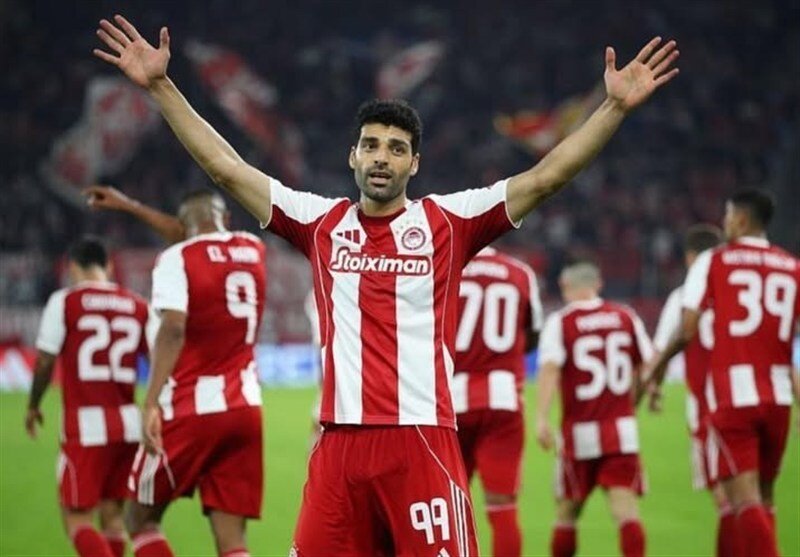
According to The Mirror, Mehdi Taremi, Iran’s prominent forward, could be prevented from entering the United States despite playing a pivotal role in Iran’s qualification campaign.
Taremi scored 10 goals in 15 matches during the qualifiers, making him one of the decisive figures behind Iran’s top finish in its qualifying group and its berth at the North American World Cup.
However, the 33-year-old striker now reportedly faces the risk of being denied a visa due to issues related to mandatory military service—an obstacle that has previously affected athletes from countries under U.S. sanctions.
Iran’s Football Federation Alternative
The Mirror also cited comments by Mehdi Taj, head of the Football Federation of the Islamic Republic of Iran (FFIRI), who stated that the United States may refuse visas to some Iranian players based on where they completed their military service. Taj said the federation has already begun considering alternative scenarios and has identified potential replacements for players who may be unable to attend.
These remarks were quickly interpreted by Iranian and international media as a serious indication that star players such as Taremi could be at risk of missing the tournament, placing his name at the center of speculation.
Taremi’s Case Differs from Teammates
Despite the concerns, the Mirror noted that Taremi’s situation differs from that of many of his teammates. He completed his military service between 2010 and 2012 in the Navy of Iran’s Islamic Revolutionary Guard Corps (IRGC) in Bushehr, near his hometown, and has fully fulfilled his service obligations under Iranian law. Nonetheless, it remains unclear how U.S. authorities will assess this background when making a final visa decision.
World Cup Under the Shadow of Politics
Iran has been drawn into Group G at the 2026 World Cup alongside Belgium, Egypt, and New Zealand, with matches scheduled to be played in Los Angeles and Seattle. However, the potential absence of one of Iran’s most influential players has generated concerns that extend beyond sporting considerations.
The Mirror concluded that if U.S. visa policies prevent key players from teams such as Iran or Haiti from participating, FIFA will face a serious challenge in preserving the World Cup’s non-political character—one that could undermine the credibility of the tournament’s claim to be “a World Cup for all.”
British Media Criticize U.S. Decision Over Taremi’s Possible World Cup Absence
Fibonacci Ai